-
-
You have your share of patriots. The other site I mod has a part time TA officer that got pretty pissy when I reminded him we spanked the Redcoats at Saratoga...and I'm sure there are many with a reverence for the Union Jack. I don't think I'd burn one in front of a group of football hooligans...Comment
-
At least the Scots gave us great whisky (no "e" people!).
I bought another bottle of Highland Park yesterday, Sesh.
I'll be eternally grateful for you turning me on to that stuff!
 “If bullshit was currency, Joe Biden would be a billionaire.” - George W. Bush
Comment
-
... and there you have it - the "my country is better than yours" bullshit didn't take long to start.
Is it that hard to look upon someone from another country as your equal?
Why is it that inbred retards in your country are worth more to you than useful people from other countries?
Isn't your logic a "little" fucked up?
Ooh, 18 years single malt... I'm drooling like a motherfucker... how much is a cask of that stuff???
Cheers! :bottle:Comment
-
National abolition dates
Main article: Abolition of slavery timeline
Slavery was abolished in these nations in these years:
Hungary: Stephen I of Hungary, the first Hungarian Christian king, declared in his laws (near 1000) that any slave that lives, stays or enters the territory of the Kingdom of Hungary would become free immediately.
Sweden: Magnus IV of Sweden declared the end of thralldom in 1335 "for thralls born by Christian parents in the thing areas of Västergötland and Värend".[39] Swedish participation in the transatlantic slave trade was forbidden in 1813, and in 1847, slavery was abolished, after an initial decision taken in 1846.[40] (The last legally owned slaves in the Swedish colony of St Barthélemy were bought by the state and freed on 9 October 1847.)[41]
Japan: In 1587 Toyotomi Hideyoshi ordered all slave trading to be abolished. His successor Tokugawa Ieyasu also continued abolition of slavery although severe servitude was still in practice until the fall of the Tokugawa Shogunate in the 1860s.
Portugal: 1761 in Portugal and Portuguese India (1869, African colonies)
England and Wales: In practice, 1772, as a result of Somersett's case; although the legal effect of this was much more limited; see Slavery at common law
Vermont Republic: 1777, Commonwealth of Vermont, an independent republic created after the American Revolution, on 8 July 1777. Vermont joined the United States of America in 1791.
Bukovina: 1783, Joseph II, Holy Roman Emperor issued an order abolishing slavery on 19 June 1783 in Czernowitz.[42]
Central Great Lakes Region of the United States: 1787, pre-dating the United States Constitution by the Northwest Ordinance which re-affirmed it in 1789.
Haiti: 1791, revolt among nearly half a million slaves in the North; the French commissioner of the colony ended slavery in 1794.
Upper Canada: 1793, by Act Against Slavery (this free-womb act did not free any slaves, but stated that children of current slaves would become free at age 25)
France (first time): 1794–1802, including all colonies (although abolition was never carried out in some colonies, because of resistance by local assemblies, or because the colonies were under British occupation)
Scotland: 1799 by an act of the Parliament of Great Britain (39 Geo.III. c. 56).
Chile: The Spanish crown abolished slavery in 1683. 1811 partially, and in 1823 for all who remained as slave and "whoever slave setting a foot on Chilean soil".[citation needed]
Argentina: Freedom of wombs in 1813, full abolition in 1853
Gran Colombia (Ecuador, Colombia, Panama, and Venezuela): 1821, through a gradual emancipation plan incorporating free-womb laws and compensated emancipation (New Granada in 1853, Venezuela in 1854)
Federal Republic of Central America, present (Guatemala, El Salvador, Honduras, Nicaragua and Costa Rica): 1824
Mexico: 1829
British Empire: 1833, including all colonies (with effect from 1 August 1834; in East Indies from 1 August 1838). Slavery was ruled illegal in England in 1772. In 1807 slave trading was abolished, and the Royal Navy tasked with suppressing it, even when carried on by non-British subjects.
Mauritius: 1 February 1835, under the British government. This day is now a public holiday.
Spain: 1837, only for metropolis, not for colonies.
Denmark: 1848, including all colonies (3 July, Danish West Indies)
France (second time): 1848, including all colonies
Peru: African-Peruvian slaves were nominally released in 1821 by Gen. San Martin, but they did not get actual freedom until Ramon Castilla's decree of 1851. Chinese labourers replaced the African slaves since then and worked on a semi-slavery regime, until they were mostly freed by Chilean troops during the War of the Pacific in 1880. Native Peruvians in some regions of the country continued working in slave-like conditions under a regime that had begun as encomiendas during the Spanish rule,[citation needed] which was finally abolished by Gen. Juan Velasco in 1969, the year de facto slavery finally ended in Peru.
Moldavia: 1855
Wallachia: 1856
Russia: In 1861 Emancipation of Serfs, releasing 20 million, occurred under Tsar Alexander II; Emancipation reform of 1861
The Netherlands: 1863, including all colonies, but kept using 'Recruits' from Africa until 1940
The United States: 1865, after the American Civil War (Many states abolished slavery for themselves at various dates between 1777 and 1864)
Puerto Rico 1873 and Cuba: 1886 (both were colonies of Spain at the time)
Ottoman Empire: 1876.
Brazil: 1888. The last country in the Americas to abolish slavery.[43] The Imperial Princess Isabel de Bragança abolished all forms of slavery existent in the Brazilian Empire.
Korea: 1894 (hereditary slavery ended in 1886)
Madagascar: 1896
Zanzibar: 1897 (slave trade abolished in 1873)
Siam (Thailand): 1905[44]
China: 1910[45] (However, still in 1930, there were still about 4 million children treated as slaves in China.[46][47])
Somalia: 1920[48]
Afghanistan: 1923[49]
Sudan: Officially abolished in 1924, actually still practiced today.[50] See Slavery in Sudan.
Ethiopia: 1923 (slavery was officially abolished at this time as a prerequisite for admission into the League of Nations, though it took many years for the law to be enforced throughout the empire)
Iraq: 1924[51]
Nepal: 1926[52][53]
Iran: 1928
Burma: 1929
Morocco: Slavery was outlawed in the 1930s.[54]
Northern Nigeria: 1936[55]
Qatar: 1952
Saudi Arabia: 1962
Yemen: 1962
United Arab Emirates: 1963
Oman: 1970
Mauritania: July 1980 (still formally abolished by French authorities in 1905, then implicitly in the new constitution of 1961 and expressly in October that year when the country joined the United Nations), actually still practiced. Slavery in Mauritania was criminalized in August 2007.
Niger: 2003. Slave markets in Niger were closed during the French colonization, but slavery in Niger was finally criminalized as late as in 2003 (came into force a year later).[56]
Nepal: 2008. The government abolished the Haliya system of forced labour, freeing about 20,000 people.[57]Comment
-
Of course you could argue that slavery hasn't been abolished in the US.
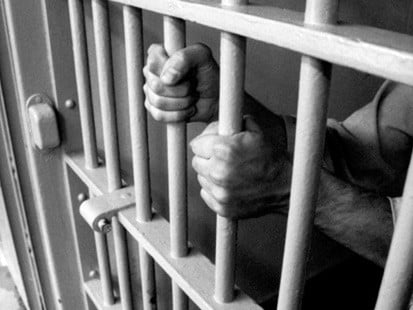
Human rights organizations, as well as political and social ones, are condemning what they are calling a new form of inhumane exploitation in the United States, where they say a prison population of up to 2 million - mostly Black and Hispanic - are working for various industries for a pittance. For the tycoons who have invested in the prison industry, it has been like finding a pot of gold. They don't have to worry about strikes or paying unemployment insurance, vacations or comp time. All of their workers are full-time, and never arrive late or are absent because of family problems; moreover, if they don't like the pay of 25 cents an hour and refuse to work, they are locked up in isolation cells.
There are approximately 2 million inmates in state, federal and private prisons throughout the country. According to California Prison Focus, "no other society in human history has imprisoned so many of its own citizens." The figures show that the United States has locked up more people than any other country: a half million more than China, which has a population five times greater than the U.S. Statistics reveal that the United States holds 25% of the world's prison population, but only 5% of the world's people. From less than 300,000 inmates in 1972, the jail population grew to 2 million by the year 2000. In 1990 it was one million. Ten years ago there were only five private prisons in the country, with a population of 2,000 inmates; now, there are 100, with 62,000 inmates. It is expected that by the coming decade, the number will hit 360,000, according to reports.
What has happened over the last 10 years? Why are there so many prisoners?
"The private contracting of prisoners for work fosters incentives to lock people up. Prisons depend on this income. Corporate stockholders who make money off prisoners' work lobby for longer sentences, in order to expand their workforce. The system feeds itself," says a study by the Progressive Labor Party, which accuses the prison industry of being "an imitation of Nazi Germany with respect to forced slave labor and concentration camps."
The prison industry complex is one of the fastest-growing industries in the United States and its investors are on Wall Street. "This multimillion-dollar industry has its own trade exhibitions, conventions, websites, and mail-order/Internet catalogs. It also has direct advertising campaigns, architecture companies, construction companies, investment houses on Wall Street, plumbing supply companies, food supply companies, armed security, and padded cells in a large variety of colors."
According to the Left Business Observer, the federal prison industry produces 100% of all military helmets, ammunition belts, bullet-proof vests, ID tags, shirts, pants, tents, bags, and canteens. Along with war supplies, prison workers supply 98% of the entire market for equipment assembly services; 93% of paints and paintbrushes; 92% of stove assembly; 46% of body armor; 36% of home appliances; 30% of headphones/microphones/speakers; and 21% of office furniture. Airplane parts, medical supplies, and much more: prisoners are even raising seeing-eye dogs for blind people.
CRIME GOES DOWN, JAIL POPULATION GOES UP
According to reports by human rights organizations, these are the factors that increase the profit potential for those who invest in the prison industry complex:
. Jailing persons convicted of non-violent crimes, and long prison sentences for possession of microscopic quantities of illegal drugs. Federal law stipulates five years' imprisonment without possibility of parole for possession of 5 grams of crack or 3.5 ounces of heroin, and 10 years for possession of less than 2 ounces of rock-cocaine or crack. A sentence of 5 years for cocaine powder requires possession of 500 grams - 100 times more than the quantity of rock cocaine for the same sentence. Most of those who use cocaine powder are white, middle-class or rich people, while mostly Blacks and Latinos use rock cocaine. In Texas, a person may be sentenced for up to two years' imprisonment for possessing 4 ounces of marijuana. Here in New York, the 1973 Nelson Rockefeller anti-drug law provides for a mandatory prison sentence of 15 years to life for possession of 4 ounces of any illegal drug.
. The passage in 13 states of the "three strikes" laws (life in prison after being convicted of three felonies), made it necessary to build 20 new federal prisons. One of the most disturbing cases resulting from this measure was that of a prisoner who for stealing a car and two bicycles received three 25-year sentences.
. Longer sentences.
. The passage of laws that require minimum sentencing, without regard for circumstances.
. A large expansion of work by prisoners creating profits that motivate the incarceration of more people for longer periods of time.
. More punishment of prisoners, so as to lengthen their sentences.
HISTORY OF PRISON LABOR IN THE UNITED STATES
Prison labor has its roots in slavery. After the 1861-1865 Civil War, a system of "hiring out prisoners" was introduced in order to continue the slavery tradition. Freed slaves were charged with not carrying out their sharecropping commitments (cultivating someone else's land in exchange for part of the harvest) or petty thievery - which were almost never proven - and were then "hired out" for cotton picking, working in mines and building railroads. From 1870 until 1910 in the state of Georgia, 88% of hired-out convicts were Black. In Alabama, 93% of "hired-out" miners were Black. In Mississippi, a huge prison farm similar to the old slave plantations replaced the system of hiring out convicts. The notorious Parchman plantation existed until 1972.
During the post-Civil War period, Jim Crow racial segregation laws were imposed on every state, with legal segregation in schools, housing, marriages and many other aspects of daily life. "Today, a new set of markedly racist laws is imposing slave labor and sweatshops on the criminal justice system, now known as the prison industry complex," comments the Left Business Observer.
Who is investing? At least 37 states have legalized the contracting of prison labor by private corporations that mount their operations inside state prisons. The list of such companies contains the cream of U.S. corporate society: IBM, Boeing, Motorola, Microsoft, AT&T, Wireless, Texas Instrument, Dell, Compaq, Honeywell, Hewlett-Packard, Nortel, Lucent Technologies, 3Com, Intel, Northern Telecom, TWA, Nordstrom's, Revlon, Macy's, Pierre Cardin, Target Stores, and many more. All of these businesses are excited about the economic boom generation by prison labor. Just between 1980 and 1994, profits went up from $392 million to $1.31 billion. Inmates in state penitentiaries generally receive the minimum wage for their work, but not all; in Colorado, they get about $2 per hour, well under the minimum. And in privately-run prisons, they receive as little as 17 cents per hour for a maximum of six hours a day, the equivalent of $20 per month. The highest-paying private prison is CCA in Tennessee, where prisoners receive 50 cents per hour for what they call "highly skilled positions." At those rates, it is no surprise that inmates find the pay in federal prisons to be very generous. There, they can earn $1.25 an hour and work eight hours a day, and sometimes overtime. They can send home $200-$300 per month.
Thanks to prison labor, the United States is once again an attractive location for investment in work that was designed for Third World labor markets. A company that operated a maquiladora (assembly plant in Mexico near the border) closed down its operations there and relocated to San Quentin State Prison in California. In Texas, a factory fired its 150 workers and contracted the services of prisoner-workers from the private Lockhart Texas prison, where circuit boards are assembled for companies like IBM and Compaq.
[Former] Oregon State Representative Kevin Mannix recently urged Nike to cut its production in Indonesia and bring it to his state, telling the shoe manufacturer that "there won't be any transportation costs; we're offering you competitive prison labor (here)."
PRIVATE PRISONS
The prison privatization boom began in the 1980s, under the governments of Ronald Reagan and Bush Sr., but reached its height in 1990 under William Clinton, when Wall Street stocks were selling like hotcakes. Clinton's program for cutting the federal workforce resulted in the Justice Departments contracting of private prison corporations for the incarceration of undocumented workers and high-security inmates.
Private prisons are the biggest business in the prison industry complex. About 18 corporations guard 10,000 prisoners in 27 states. The two largest are Correctional Corporation of America (CCA) and Wackenhut, which together control 75%. Private prisons receive a guaranteed amount of money for each prisoner, independent of what it costs to maintain each one. According to Russell Boraas, a private prison administrator in Virginia, "the secret to low operating costs is having a minimal number of guards for the maximum number of prisoners." The CCA has an ultra-modern prison in Lawrenceville, Virginia, where five guards on dayshift and two at night watch over 750 prisoners. In these prisons, inmates may get their sentences reduced for "good behavior," but for any infraction, they get 30 days added - which means more profits for CCA. According to a study of New Mexico prisons, it was found that CCA inmates lost "good behavior time" at a rate eight times higher than those in state prisons.
IMPORTING AND EXPORTING INMATES
Profits are so good that now there is a new business: importing inmates with long sentences, meaning the worst criminals. When a federal judge ruled that overcrowding in Texas prisons was cruel and unusual punishment, the CCA signed contracts with sheriffs in poor counties to build and run new jails and share the profits. According to a December 1998 Atlantic Monthly magazine article, this program was backed by investors from Merrill-Lynch, Shearson-Lehman, American Express and Allstate, and the operation was scattered all over rural Texas. That state's governor, Ann Richards, followed the example of Mario Cuomo in New York and built so many state prisons that the market became flooded, cutting into private prison profits.
After a law signed by Clinton in 1996 - ending court supervision and decisions - caused overcrowding and violent, unsafe conditions in federal prisons, private prison corporations in Texas began to contact other states whose prisons were overcrowded, offering "rent-a-cell" services in the CCA prisons located in small towns in Texas. The commission for a rent-a-cell salesman is $2.50 to $5.50 per day per bed. The county gets $1.50 for each prisoner.
STATISTICS
Ninety-seven percent of 125,000 federal inmates have been convicted of non-violent crimes. It is believed that more than half of the 623,000 inmates in municipal or county jails are innocent of the crimes they are accused of. Of these, the majority are awaiting trial. Two-thirds of the one million state prisoners have committed non-violent offenses. Sixteen percent of the country's 2 million prisoners suffer from mental illness.
Global Research Articles by Vicky PelaezComment
-
I like this one A LOT!
It's quite affordable, actually - less than a Jack Daniel's bottle. And it tastes SO FUCKIN' GOOD!
Pity I only ever found 3 bottles here in Portugal... and they're long, long gone.

Cheers! :bottle:Comment
-
i got a bottle of 12 y.o. macallan for my birthday, mmmmmm. the 18 is amazing, and the 25, superb.Another one of those classic genius posts, sure to generate responses. You log on the next day to see what your witty gem has produced to find no one gets it and 2 knotheads want to stick their dicks in it... Well played, sir!!Comment
-
Comment
-
Hah.
Probably my favourite GNR song...
I was about to say Makers Mark but I'm really off bourbon these days.
I seem to have grown out of it.Comment
-
The 'wink' smiley around here really is shitty...Comment


 Tweet
Tweet


Comment